
For many people, the most frightening moment in a criminal case does not happen at sentencing.
It happens months later.
A probation officer calls.
A letter arrives.
Someone mentions that a warrant may have been issued.
Suddenly, a sentence that seemed to be behind you feels very much alive again.
The first question almost everyone asks is the same.
"Am I going to jail?"
Sometimes the answer depends on something as serious as a new criminal arrest.
Sometimes it involves something much less dramatic.
- A missed appointment.
- An unpaid fine.
- Community service that was never completed.
- A failed drug screen.
- Missing counseling.
- Traveling without permission.
- Failing to report a change of address.
To the person accused of violating probation, those situations can feel very different.
Under Georgia law, however, each one can place your freedom at risk.
That does not mean every probation violation ends with incarceration.
One of the biggest misconceptions I encounter is the belief that violating probation automatically means serving the remainder of your sentence in jail or prison.
Georgia law is more nuanced than that.
Some violations are considered technical.
Others involve special conditions imposed by the sentencing court.
Others involve allegations that a person committed an entirely new criminal offense while on probation.
Those distinctions matter because they affect the authority a judge has, the penalties that may be imposed, and the strategy used to defend the case.
Just as important, a probation violation hearing is not the same as a criminal trial.
The prosecutor is not required to prove the allegation beyond a reasonable doubt.
The judge, rather than a jury, decides whether a violation occurred.
Different rules of evidence often apply.
Understanding those differences can dramatically change how a case should be approached from the very beginning.
As a former Georgia prosecutor, I know how probation revocation cases are built.
Today, I examine those same allegations from the defense perspective.
- Was the alleged violation accurately reported?
- Is there reliable evidence that the violation actually occurred?
- Was the probation condition clearly explained?
- Did circumstances outside the person's control make compliance impossible?
- Has the individual otherwise complied with probation for months or years?
- Are there alternatives to incarceration that better serve both accountability and rehabilitation?
Those questions matter because probation is designed to supervise people in the community, not simply to create opportunities for incarceration.
Judges understand that people sometimes make mistakes.
They also understand the difference between someone who deliberately ignores the conditions of probation and someone who encounters genuine obstacles while trying to comply.
Every probation violation case has its own facts.
Every person's history is different.
Every judge has discretion that must be exercised based on the evidence presented in court.
The purpose of this guide is to explain how probation violations are handled in Savannah and throughout Georgia, what conduct may trigger revocation proceedings, what rights you have during the process, the penalties a court may impose, and the legal strategies that can make a meaningful difference before your case is decided.
Because after nearly two decades in Georgia courtrooms, I have learned something that remains true in almost every probation case.
The outcome is rarely determined by the allegation alone.
It is determined by the facts, the evidence, and what can be demonstrated before the court.
What happens if you violate probation in Savannah, Georgia?
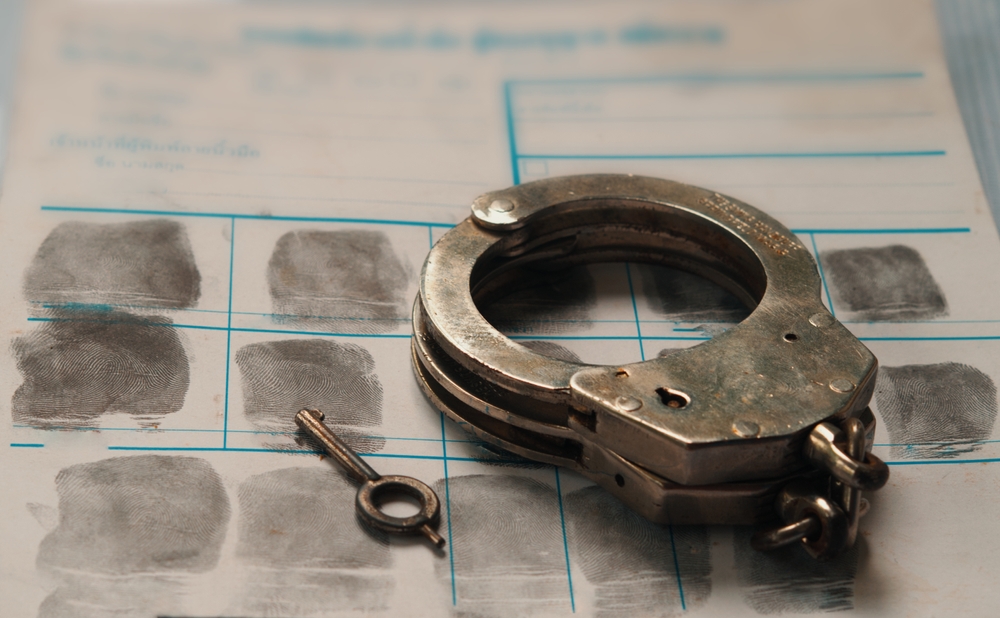
If you violate your probation in Savannah, you risk immediate arrest and a complete revocation of your freedom. A judge can revoke your remaining probation time, forcing you to serve the rest of your original sentence behind bars in a state prison or the Chatham County jail.
Facing criminal allegations is stressful, but facing a probation violation allegation can feel entirely overwhelming. Your liberty is immediately put in jeopardy when state authorities claim you failed to meet court terms.
Based on my 15+ years of experience in criminal law as a former prosecutor, I know exactly how aggressively the state pursues these actions in Chatham County.
Your life matters, and an administrative oversight should not cost you your freedom. If you stand accused of a violation, you must act decisively to protect your future.
What the Law Says
- Immediate Custody: A violation can lead to a fast-tracked warrant and jail time without the option for bond.
- Violation Types Matter: Georgia caps penalties based on whether your error was technical, a special-condition failure, or a brand-new crime.
- Lower Standard of Proof: The state only needs a "preponderance of the evidence" to revoke your probation, making aggressive defense critical.
- First Offender Risks: Violating First Offender status can result in maximum prison resentencing.
- Direct Representation: I will meticulously review all evidence and fight to keep you out of the prison system.
What Are the Immediate Consequences of a Probation Violation?
Violating probation in Savannah immediately risks your arrest and incarceration. Your probation officer can issue a warrant, forcing you to remain in the Chatham County jail without bond until a judge decides whether to revoke your freedom and send you to prison.
The first move in any probation matter is understanding your probation officer's immediate authority. When they believe you violated terms, the sequence of events moves rapidly against you:
Arrest Warrants
Your officer quickly files a revocation petition, and a judge signs a warrant for your immediate arrest.
No Immediate Bond
In contrast to a standard criminal arrest, you generally do not have a right to an immediate bond for a probation violation.
Extended Jail Time
Authorities will hold you in custody until your formal hearing date arrives, meaning you could sit in jail for weeks before seeing a judge.
How Does Georgia Law Categorize Your Probation Violation?
Georgia law divides probation violations into technical, special-condition, and substantive categories. Specifically, technical violations involve administrative errors like missing a meeting, special-condition violations involve failing mandatory classes, and substantive violations involve committing a brand-new misdemeanor or felony crime.
The specific category dictates the maximum penalty the judge can enforce against you. The primary reason is that Georgia statutes cap the amount of prison time a court can reinstate based on the nature of your offense.
Summary of Georgia Probation Violation Penalties
The table below outlines how local courts penalize different types of probation non-compliance:
| Violation Category | Common Local Examples | Maximum Potential Penalties |
|---|---|---|
| Technical Violation | Missing a meeting with your supervision officer, failing to pay monthly fees, moving without updating your address. | Limited jail time (typically capped by state law for initial administrative oversights). |
| Special-Condition Violation | Failing random drug/alcohol screens, skipping mandatory DUI risk reduction school, failing to complete community service. | The judge can revoke the entire remaining balance of your probation to a state prison facility. |
| Substantive Violation | Getting arrested for a brand-new felony or misdemeanor offense in Chatham County while under active supervision. | The court can completely revoke your probation, forcing you to serve the max sentence of the new and original crime back-to-back. |
- Technical Violations: Failing to report to the Georgia Department of Community Supervision, failing to pay monthly supervision fees, or traveling outside the jurisdiction without a permit. The law caps revocation time for these errors.
- Special-Condition Violations: Failing to complete mandatory DUI risk reduction school, failing random drug screens, or avoiding community service hours. The judge can revoke the entire remaining balance of your probation to prison for these violations.
- Substantive Violations: Getting arrested for a new misdemeanor or felony crime while on active supervision. If the state proves a new felony, you face incarceration for the full remaining balance of your original sentence.
What Happens if You Violate the Georgia First Offender Act?
Violating probation under the Georgia First Offender Act carries catastrophic consequences. If a judge revokes your status, you lose your protection against a permanent criminal record and can be resentenced to the absolute maximum prison term allowed for your original charge.
The Loss of the Criminal Record Shield
The primary reason the First Offender Act is valuable is that it prevents a felony conviction from entering your public record upon successful completion. If you violate those terms, the judge formally adjudicates you guilty. Your record is permanently stained, impacting your employment, housing, and civil rights forever.
The Risk of Maximum Resentencing
In contrast to standard probation where your potential jail time is capped at your remaining balance, First Offender violations completely reset the clock. If you originally took a plea deal for 3 years of probation on a crime carrying a 15-year maximum penalty, the judge can legally tear up the original deal and send you to prison for the full 15 years.
What Should You Do If You Realize You Made a Probation Mistake?
If you realize you missed a meeting or failed to pay a fee, you must take immediate legal action before a warrant is signed. Securing legal counsel to proactively contact the court often prevents a sudden arrest and demonstrates your commitment to compliance.
- Do Not Hide: Evading your supervision officer guarantees a warrant. The state considers evasion an admission of guilt, and it will only compound your legal jeopardy.
- Gather Documentation: If a medical emergency, severe illness, or car accident caused you to miss a mandatory meeting, collect the hospital records or police reports immediately. Proof of an unavoidable emergency is a powerful defense.
- Preempt the Warrant: I can often contact the probation office or the judge's staff directly to schedule a walk-in hearing or clarify a misunderstanding, rather than waiting for the Savannah-Chatham Metropolitan Police Department to arrest you at your workplace.
How Are Out-of-Town Visitors Handled for Savannah Probation Violations?
Out-of-town visitors serving Savannah probation must strictly adhere to interstate compact rules. Specifically, if you fail to report remotely or commit a violation in your home state, Chatham County will issue a nationwide warrant to extradite you back to Georgia.
The Interstate Compact Agreement
Many individuals arrested in Savannah's historic district or tourist areas are allowed to serve their probation back in their home state. However, your home state authorities report your progress directly to Georgia. If you fail a local drug test or miss a meeting in Florida or South Carolina, Georgia initiates the revocation process here in Chatham County.
The Threat of Nationwide Extradition
A Chatham County judge will not hesitate to issue a fugitive warrant if you abscond from supervision. You could be arrested during a routine traffic stop in your home state and held in a local county jail for weeks while awaiting physical transport back to Savannah to face the judge.
Can You Challenge a Probation Officer's Credibility in Chatham County?
You have the absolute right to challenge a probation officer's credibility during your revocation hearing. I scrutinize police reports and supervision logs to expose biased reporting, timeline discrepancies, or reliance on unverified hearsay that violates your due process rights.
- Demanding Verifiable Proof: The state cannot rely entirely on rumors. I demand hard, physical documentation for every missed meeting, failed test, or alleged curfew violation brought against you.
- Exposing Administrative Errors: Probation officers manage massive, overwhelming caseloads. I frequently identify cases where an officer simply filed paperwork in the wrong client's folder or failed to properly log a submitted payment.
- Cross-Examination Tactics: As a former prosecutor, I know exactly how state officers are trained to testify. I aggressively cross-examine them on the stand to highlight inconsistencies in their story and protect your liberty.
What Happens at a Chatham County Probation Revocation Hearing?

A Chatham County probation revocation hearing is a bench trial where a judge decides your fate based on a low standard of proof. The prosecutor needs only a preponderance of the evidence—proving the violation is more likely true than not—to revoke your probation entirely.
Your hearing occurs before a single judge at the Chatham County Courthouse. You do not get a jury trial. To understand what you are up against, you must understand how the state operates in the courtroom.
The Lower Burden of Proof
The state has a massive advantage because it does not have to prove the violation beyond a reasonable doubt. The prosecutor only has to show that it is more likely than not that you broke a rule.
The Presentation of Evidence
The prosecutor presents the motion and introduces evidence against you, which routinely includes hearsay from your probation officer. Specifically, they may use failed drug screening documentation or arrest reports to build their case. I used to build cases for the State of Georgia, now I tear them apart.
How Can a Defense Lawyer Protect Your Freedom?
A defense lawyer protects your freedom by identifying critical weaknesses in the state's allegations. I analyze the details of your case, challenge the evidence brought against you, and present compelling mitigating circumstances to convince the judge to keep you out of custody.
You will be in direct communication with your lawyer throughout this process. My legal assistant Ashley manages scheduling so I can focus entirely on executing your defense strategy:
- Challenging Testing Procedures: I analyze the details of your case to find fatal flaws in drug testing laboratory protocols or collection timelines.
- Scrutinizing Officer Reports: I identify weaknesses in the prosecution's case by hunting down inaccuracies or missing documentation in your probation officer's logs.
- Negotiating Alternatives: I aggressively push for alternatives to incarceration, such as modified probation terms, mandatory drug treatment programs, or extended payment timelines.
Frequently Asked Questions About Savannah Probation Violations
Can my probation officer drop a violation warrant?
Probation officers have the discretion to handle minor errors internally, but once they file a formal revocation petition with a Chatham County judge, only the court can dismiss the warrant. Specifically, if a formal petition is signed, you must appear before a judge to resolve the matter. I meticulously review all evidence to find reasons to convince the state or the judge to withdraw the active action against you.
Will I go straight to jail if I fail a drug test?
Failing a random drug screen is a special-condition violation that frequently results in immediate arrest once the test results are finalized. In contrast to administrative errors, judges treat failed drug screens with severe urgency. I challenge the evidence brought against you by analyzing the specific testing procedures, lab protocols, and collection timelines utilized by the state.
What is the difference between a technical and a substantive violation?
A technical violation stems from failing to follow court-ordered administrative rules, whereas a substantive violation means you committed a brand-new crime while on supervision. The primary reason this distinction matters is that technical infractions carry strictly limited jail sentences, while substantive violations empower a judge to revoke your entire probation balance back to a state prison.
Your Next Step Matters
A probation violation is serious, but it is not the same as an automatic revocation of your freedom.
Whether the allegation involves a missed appointment, a failed drug test, an unpaid fine, or a new criminal charge, the court must still determine what happened, why it happened, and what response is appropriate under Georgia law. The facts matter. Your history matters. The evidence matters.
Perhaps most importantly, time matters.
Many probation violation cases are won or lost long before the hearing begins. Taking prompt action, preserving documentation, and developing a thoughtful legal strategy can often place you in a far stronger position than waiting for the court to make decisions without hearing your side of the story.
As a former Georgia prosecutor, I understand how probation revocation cases are investigated and presented to the court. Today, I use that experience to help clients protect their freedom, challenge unsupported allegations, and pursue practical solutions whenever possible.
If you are facing a probation violation in Savannah or anywhere in Coastal Georgia, this is the time to understand your options, protect your rights, and make decisions based on the law rather than fear.
Time Is Critical When Facing Criminal Charges in Savannah

Every moment counts in building your defense. If you are facing a probation violation allegation in Chatham County, do not wait for the state to take your freedom. Call me, Stacey M. Goad, at The Atlantic Law Firm now at (912) 209-9000 for your free, confidential consultation. Let me start fighting for you today.
Stacey M. Goad is the founder and solo practitioner of The Atlantic Law Firm in Savannah, Georgia. She possesses over 17 years of experience in criminal law, including serving as a former Georgia DUI and Special Victims Unit prosecutor. She represents individuals throughout Chatham County facing criminal defense challenges and probation revocation matters.