
For many people, a second DUI arrest feels fundamentally different from the first.
The first time, there is often disbelief.
The second time, there is fear.
People know enough about the criminal justice system to understand that prosecutors, judges, and the Georgia legislature view repeat offenses differently. They begin asking questions that are far more urgent than they were after their first arrest.
"Am I going to jail this time?"
"Will I lose my driver's license for years?"
"Can I keep my job?"
"Is there any way to avoid a second conviction?"
Those questions are well founded because a second DUI in Georgia is not simply a first offense with harsher penalties.
It is treated as an entirely different category of case.
Georgia law imposes mandatory minimum consequences that significantly reduce the court's flexibility after a conviction. Longer license suspensions, mandatory jail time, increased fines, ignition interlock requirements, extensive community service, probation, and lasting insurance consequences all become part of the legal landscape. For many people, the indirect consequences—professional licensing issues, employment concerns, and the long-term financial burden—ultimately exceed the punishment imposed inside the courtroom.
Yet one fact often gets overlooked during those first anxious days after an arrest.
A second DUI charge is not a second DUI conviction.
That distinction matters.
The penalties described in Georgia law apply only if the State ultimately proves its case or a conviction is entered. Until then, prosecutors still carry the burden of proving every required element beyond a reasonable doubt, and every piece of evidence remains subject to careful legal scrutiny.
As a former Georgia prosecutor, I evaluated DUI investigations from the State's perspective. Today, I examine those same investigations by asking a different set of questions.
- Was the traffic stop lawful?
- Were the field sobriety evaluations conducted according to standardized procedures?
- Was the implied consent notice properly administered?
- Can the breath or blood test withstand scientific and legal scrutiny?
- Does the evidence actually prove impairment beyond a reasonable doubt?
Those questions are especially important in second-offense cases because the consequences of conviction increase dramatically. When the potential penalties become more severe, the quality of the investigation becomes even more significant.
Every DUI case follows its own path.
Some resolve through negotiation.
Others are dismissed after weaknesses in the evidence become apparent.
Some proceed to trial because the facts require twelve citizens—not assumptions—to decide the outcome.
The purpose of this guide is not to create false hope or unnecessary fear.
It is to explain exactly how Georgia treats a second DUI, what penalties the law requires after a conviction, what additional consequences many people never anticipate, and where experienced legal advocacy can make the greatest difference before those penalties ever become mandatory.
Understanding the process cannot erase the uncertainty of a second DUI arrest.
It can, however, replace speculation with knowledge—and allow important decisions to be made based on the evidence rather than the anxiety of the moment.
Are there penalties for a second DUI in Savannah, Georgia?
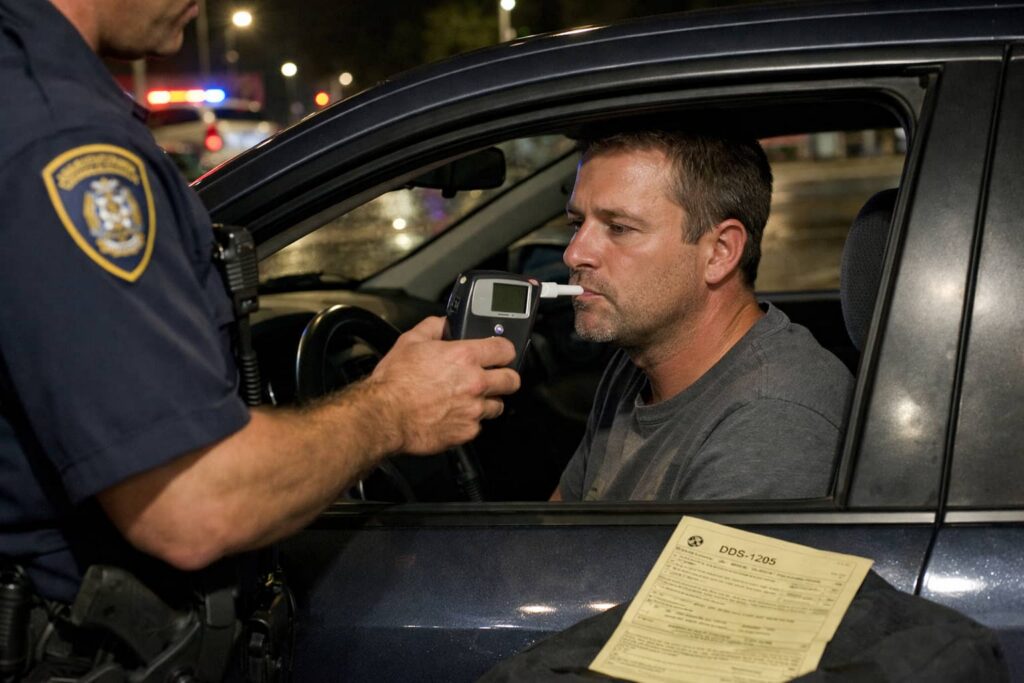
A second DUI conviction in Savannah, Georgia carries mandatory jail time, a multi-year license suspension, heavy fines, ignition interlock requirements, and a permanent criminal record.
A second DUI conviction in Georgia is not a more serious version of a first offense. It is a different category of punishment entirely, with mandatory minimums, the court has no discretion to reduce once a conviction is entered. The penalties reach into nearly every part of daily life, from how long you go to jail to whether you can drive to work.
The consequences do not end at sentencing. A second conviction means years of elevated insurance rates, a required ignition interlock device, extended probation, and a permanent mark on your criminal record that will surface in background checks indefinitely. For many people, the financial and professional damage outlasts the formal legal penalties by a decade or more.
What the penalties look like, how they compare to a first offense, and what factors affect the outcome in a Savannah courtroom is exactly what anyone facing this charge needs to understand before their first court date.
A second DUI defense lawyer who knows how Georgia prosecutes these cases is the most important resource available right now.
Call The Atlantic Law Firm at 912-209-9000 for a free, confidential consultation with Stacey Goad.
What the Law Says:
- A second DUI within ten years in Georgia triggers mandatory minimum jail time that cannot be suspended or waived by the court.
- The license suspension for a second DUI within five years is three years, compared to twelve months for a first offense.
- Total costs for a second DUI conviction in Savannah routinely exceed $15,000 when fines, surcharges, insurance increases, and program fees are combined.
- An ignition interlock device is required for reinstatement after a second DUI conviction.
- A second DUI conviction in Georgia cannot be expunged.
How Georgia Defines a Second DUI Offense
Georgia uses a ten-year look-back period to determine whether a DUI is a first or second offense.
If a prior DUI conviction falls within ten years of the current arrest date, the new charge is prosecuted as a second offense and carries elevated mandatory penalties.
The look-back period applies to the conviction date, not the arrest date. Prior DUI convictions from other states can count toward the look-back calculation under Georgia law.
The prior conviction does not have to be from Georgia or even from a similar law. What matters is whether it legally qualifies as a prior DUI under O.C.G.A. 40-6-391.
What Are the Mandatory Penalties for a Second DUI in Georgia?
Jail Time
A second DUI conviction within ten years in Georgia carries a sentence of 90 days to 12 months. A minimum of 72 hours must be served in jail and cannot be probated, suspended, or converted to community service. The remainder of the sentence may be served on probation or house arrest at the court's discretion.
This 72-hour floor is non-negotiable once a conviction is entered. Fighting the charge before conviction is the only way to avoid it entirely.
Fines and Surcharges
The base fine for a second DUI conviction in Georgia ranges from $600 to $1,000. However, state surcharges, court fees, and administrative costs stack on top of that base amount. The realistic out-of-pocket total for fines alone on a second DUI in Savannah is typically $1,500 to $3,000 or more before attorney fees, program costs, and insurance increases are factored in.
License Suspension
The license suspension for a second DUI conviction in Georgia depends on how far apart the two offenses are:
| Prior Offense Timing | Suspension Period |
|---|---|
| Second DUI within 5 years | 3-year hard suspension |
| Second DUI within 10 years (but outside 5 years) | 12-month suspension |
A hard suspension means no limited driving permit is available for a portion of the suspension period. The Georgia Department of Driver Services administers the suspension independently of the criminal case, and reinstatement requires satisfying several conditions before driving privileges are restored.
Community Service
A second DUI conviction requires a minimum of 240 hours of community service. That is six full 40-hour work weeks of required service on top of all other penalties. Community service must be completed within the probation period.
Probation
Georgia courts impose a 12-month probation sentence for second DUI convictions, with any jail time not served in custody converted to probation supervision. Probation includes regular reporting, random drug and alcohol testing, payment of all fines and fees, and completion of all court-ordered programs.
Violating any probation condition can result in the remaining suspended jail time being activated.
What Additional Requirements Come with a Second DUI Conviction?
Ignition Interlock Device
An ignition interlock device is required for license reinstatement after a second DUI conviction in Georgia. The device is installed in the vehicle and requires the driver to pass a breath test before the engine will start. It also requires periodic rolling tests while the vehicle is in motion.
The cost of installation and ongoing monthly monitoring falls entirely on the defendant. Installation typically runs $100 to $200, and monthly monitoring fees range from $70 to $150. The requirement remains in place for the duration specified by the Georgia Department of Driver Services.

DUI School and Risk Assessment
All DUI offenders in Georgia must complete the DUI Alcohol or Drug Use Risk Reduction Program before license reinstatement. For a second offense, the program includes a clinical assessment that may result in a recommendation for extended treatment beyond the standard 20-hour course.
Completion is required within one year of conviction and must be done through a state-approved provider.
SR-22 Insurance
Following a second DUI conviction, Georgia law requires the filing of an SR-22 certificate of insurance with the Department of Driver Services. An SR-22 is a high-risk insurance designation.
Most insurers significantly increase premiums upon filing, and the requirement stays in place for three years. The total additional cost over that period commonly reaches $4,000 to $8,000, depending on the driver's prior history and insurer.
How Does a Second DUI Affect Your Record?
Is a Second DUI a Felony in Georgia?
A second DUI in Georgia is typically a misdemeanor as long as no aggravating factors are present. The offense becomes a felony on a fourth or subsequent conviction within ten years, or if the DUI resulted in serious injury or death. A misdemeanor conviction still produces a permanent criminal record that appears on background checks.
Can a Second DUI Be Expunged in Georgia?
No. A DUI conviction in Georgia, including a second offense, cannot be expunged or restricted from a criminal record under current state law. A nolo contendere plea, sometimes called a no contest plea, still results in a conviction for purposes of sentencing and record retention. The only ways to avoid a conviction on the record are a dismissal, a not-guilty verdict at trial, or a charge reduction to a non-DUI offense.
What Does a Second DUI Actually Cost in Savannah?
The full financial impact of a second DUI conviction in Savannah reaches well beyond the fine listed in the sentencing order.
- Court fines and surcharges ($1,500 to $3,000)
- Bail and bond fees ($200 to $600)
- Towing and impound ($100 to $400)
- DUI school and risk reduction program ($350 to $600)
- License reinstatement fee ($210)
- Ignition interlock (12 months) ($900 to $2,000)
- SR-22 insurance increase (3 years) ($4,000 to $8,000+)
- Attorney fees (Varies)
The realistic total for a second DUI conviction in Savannah, including all mandatory costs and insurance impact, commonly exceeds $15,000. For defendants who lose professional licenses or employment as a result of the conviction, the financial consequences go much further.
Can the Penalties Be Reduced or Avoided?
A second DUI charge is not a guaranteed conviction. The same defenses available in a first-offense case apply here, and the stakes of fighting the charge are higher.
Challenging the Stop and the Evidence
Every element of the prosecution's case is subject to challenge. If the traffic stop lacked reasonable suspicion, the evidence collected during it may be suppressible. If field sobriety tests were administered improperly, the results lose reliability. If the Intoxilyzer 9000 was not properly calibrated or maintained, the breath test results can be challenged. A single successful suppression motion can remove the foundation of the state's case.
Charge Reduction to Reckless Driving
A reduction from a second DUI to reckless driving is possible in some cases. Reckless driving carries its own penalties but does not trigger the mandatory minimums, the ignition interlock requirement, or the three-year suspension that come with a second DUI conviction. Whether a reduction is available depends on the strength of the defense and how the case is negotiated.
First Offender Act Considerations
The First Offender Act is generally not available to defendants facing a second DUI if a prior conviction already exists within the look-back period. Whether any alternative disposition is available depends on the specific facts of the case and the defendant's history.
Frequently Asked Questions About Second DUI Penalties in Georgia
Does a second DUI in Georgia require mandatory jail time even if no one was hurt?
Yes. Georgia law requires a minimum of 72 hours of jail time for a second DUI conviction within ten years regardless of whether an accident occurred or anyone was injured. The mandatory minimum cannot be waived, suspended, or converted to community service. It must be served in custody.
How is the ten-year look-back period calculated in Georgia?
The look-back period runs from conviction date to arrest date. If the prior DUI conviction occurred within ten years of the current arrest, the new charge qualifies as a second offense for sentencing purposes. The calculation uses exact dates, and a prior conviction that falls one day outside the ten-year window may mean the current charge is treated as a first offense.
Can I drive at all during a three-year license suspension in Georgia?
Limited driving options may be available depending on the specific circumstances and timing of the suspension. The administrative suspension process and the court-ordered suspension operate on separate tracks. An ignition interlock device may allow limited driving during portions of the suspension period in some cases. The details depend on the outcome of the administrative hearing and the terms of any conviction.
Will a second DUI affect my professional license in Georgia?
It may. Many licensed professions in Georgia, including healthcare, law, education, commercial driving, and real estate, require disclosure of criminal convictions and conduct their own review processes. The impact varies by profession and licensing board. A second DUI conviction is more likely to trigger disciplinary action than a first offense in most regulated fields.
How is a second DUI treated differently by prosecutors in Savannah?
Prosecutors in Chatham County treat second DUI cases as repeat offender matters and are generally less willing to offer reductions than they are in first-offense cases. The strength of the defense presented, particularly through pre-trial motions that challenge the evidence, is the most significant factor in whether any negotiated outcome is available.
Make Your Voice Heard—Contact Us Today

A second DUI conviction in Savannah carries consequences that compound with each stage of the process, from the mandatory jail floor to the years of elevated insurance costs and the permanent record that no expungement can remove. The penalties are designed to be severe, and they are.
What matters now is whether the charge leads to a conviction. The state has a case to build. The question is whether you have a defense being built with the same urgency.
If you are facing a second DUI charge anywhere in coastal Georgia, how that case is handled in the next few weeks will shape where you end up.
Contact The Atlantic Law Firm at 912-209-9000 for a free, confidential consultation with Stacey Goad.